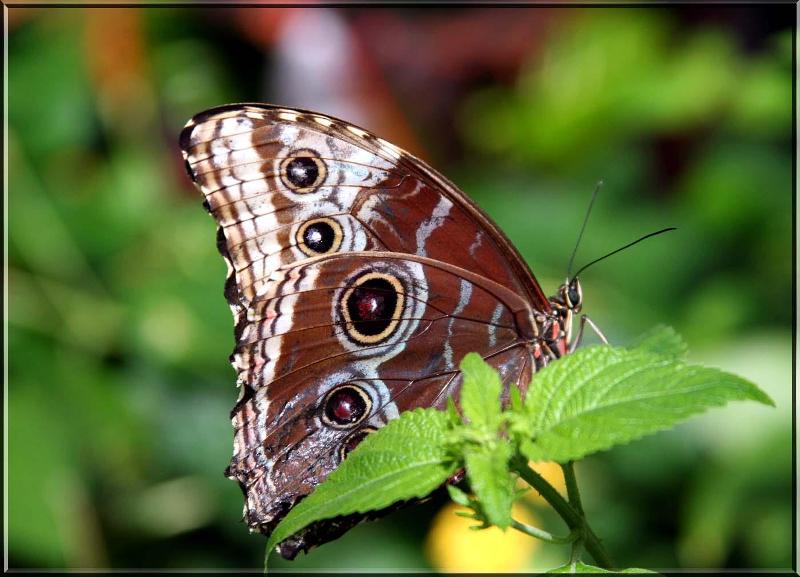
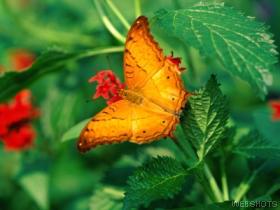
The Cruiser (Vindula erota) is a species of nymphalid butterfly found in forested areas of tropical South Asia and Southeast Asia.
Wet-season formMale Upperside bright orange-yellow. Fore wing olivaceous brown at base with the following black markings: three short sinuous transverse lines across the cell; the disco-cellulars with an inner and outer slender line; a lunular inner discal broken transverse line, a zigzag outer discal broken transverse line, a transverse inwardly curved series of postdiscal spots, those in interspaces 5 and 6 the largest, and an inner and an outer subterminal conspicuous zigzag narrow band. Hind wing with inner and outer discal black lines and inner and outer subterminal narrow black bands as on the fore wing, but the outer discal transverse line faint and ill-defined posteriorly; the space anteriorly between the two discal lines much paler yellow than the general ground-colour; in addition there is a dark straight postdiscal diffuse fascia with a superposed ocellus in interspaces 2 and 5 respectively, and a lilac spot at the tornal angle. Underside similar, the basal area enclosed by the inner discal line suffused with cinnabar-red, as is also the outer zigzag transverse ill-defined discal line. Forewing with, in addition, two cream-white preapical spots and a purplish suffusion between the two subterminal lines, the inner line straight, not zigzag; interspace 1a, and 1 posteriorly from base to inner subterminal line, paler than tho ground-colour. Hind wing with some additional transverse linear and loop-like slender black markings at base; a conspicuous, straight, transverse, narrow dark ferruginous postdiscal band, and a pale purplish suffusion beyond it between veins 2 and 5, not reaching the termen. Antennae dark ferruginous; head, thorax and abdomen olivaceous orange ; beneath, the palpi, thorax and abdomen ochraceous.
Female upperside dull brown, the basal area of both fore and hind wings, on the inner side of a vertical transverse line from just beyond apex of cell in fore wing to vein 2 on the hind wing, suffused with olivaceous green; the terminal margin, broadly, of the hind wing suffused with reddish ochraceous ; a broad, posteriorly narrowing, discal white band inclined obliquely inwards from below the costa of the fore wing to vein 2 on the hind wing, conspicuously interrupted and crossed by the dark veins on the fore wing. Fore wing with the following dusky brownish-black markings: three short transverse sinuous lines crossing the cell; a sinuous line on either side of the discocellulars ; a broad line, interrupted by the veins, defining the inner side of the white discal band; a zigzag medial transverse line and a transverse series of very diffuse spots traversing the same band, followed by a postdiscal narrow band and a zigzag subterminal line ; finally, a conspicuous white preapical spot in interspace 7. Hind wing: a dusky-brown zigzag line along the outer margin of the white discal band ; a diffuse broad postdiscal transverse shading, bearing a white-centred, dusky-brown, ochraceous-ringed ocellus, in interspaces 2 and 5 respectively, followed by an inner subterminal lunular band and an outer subterminal zigzag line of brownish black; the abdominal fold ochraceous. Underside very similar to that in the male, but differs as follows :— ground-colour ochraceous yellow, the basal area on both fore and hind wings darker ochraceous without any tinge of cinnabar-red ; all the markings similar as to form to those in the male, but chestnut-brown ; the ocelli on the hind wing larger, but otherwise similar. Antennae dark ochraceous, turning to brownish black on the apical half; palpi ochraceous ; head, thorax and abdomen olivaceous green; beneath, the palpi, thorax and abdomen pale ochraceous.
Dry-season form
Smaller than the wet-season form, the tail at apex of vein 4 in the hind wing very much shorter as a rule.
Male: Upper and undersides similar to those in the wet-season form, but the groundcolour very much paler; on the underside entirely suffused with pale cinnabar-red ; the markings smaller, often more or less obsolescent, always more faintly defined; above, the markings are dusky brownish black, beneath pale chestnut-red; the pale purplish suffusion on the terminal margins of both fore and hind wings on the underside, so conspicuous in the wet-season form, entirely wanting.
Female: Differs very remarkably from the wet-season form. Upperside: fore and hind wings with a very broad pale ochraceous-white discal band from costa of fore wing to the dorsal margin just above the tornus on the hind wing, narrowing posteriorly on the latter wing. Fore wing: basal area olivaceous green on the inner side of the discal band, as in the wet-season form, but the space between the outer two of the three dusky transverse lines crossing the cell ochraceous: the medial zigzag line and the series of diffuse spots traversing the discal band very ill-defined. Hind wing: basal area ochraceous, owing to the colour of the underside showing through by transparency; a very pale shading of olivaceous green at base of cell; terminal portion of the wing beyond the discal band bright ochraceous ; the postdiscal ocelli and the inner and outer subterminal dark lines as in the wet-season form.
Underside: ground-colour pale yellow ; the basal area on both fore and hind wings suffused with cinnabar-red; the markings similar to those in the wet-season form, but very much fainter and paler. Antennae ochraceous, palpi and a line behind the eyes cinnabar-red; head, thorax and abdomen olivaceous green, beneath bright ochraceous.

 The Gulf Fritillary, Agraulis vanillae, a striking, bright orange butterfly of the family Nymphalidae, subfamily Heliconiinae. These were formerly classified in a separate family, the Heliconiidae or longwing butterflies, and like other longwings this species does have long, rather narrow wings in comparison with other butterflies. It is not closely related to the true fritillaries. It is a medium to large butterfly, with a wingspan of from 6 to 9.5 cm. Its underwings are buff, with large silvery spots. It takes its name from the fact that migrating flights of the butterflies are sometimes seen over the Gulf of Mexico.